Home Blog Page 3

35 Gary Vaynerchuk Quotes On How to Win

0

Gary Vaynerchuk Quotes that Teach You How to Win in Life and Business.

1.“I pride myself in listening. When you have people paying attention to you, your biggest job is to listen to what they want. Deliver what your community wants.” Gary Vaynerchuk

2.“No matter what you do, your job is to tell your story.” Gary Vaynerchuk

3. “Stop hanging around people who don’t want to win.” Gary Vaynerchuk

Read – Top 25 Most Inspiring Jay Shetty Quotes to Encourage You to Succeed

4. “Look yourself in the mirror and ask yourself, what do I want to do every day for the rest of my life…Do that.” Gary Vaynerchuk

5. “There’s no reason to do shit you hate. None.” Gary Vaynerchuk

6. “99% of people don’t market in the year that we are actually living in.”

GARY VAYNERCHUK

7. “There’s not a single winner on earth that took it easy.” Gary Vaynerchuk

8. “Stop focusing on dumb shit.” Gary Vaynerchuk

9. “Love your family, work super hard, live your passion.” Gary Vaynerchuk

10. “Saying hello doesn’t have an ROI it’s about building relationships.” Gary Vaynerchuk

35 Gary Vaynerchuk Quotes On How to Win

11. “Brand storytelling is not about pushing advertising, it’s about bringing value.” Gary Vaynerchuk

12. “I’m grinding when you’re sleeping.” Gary Vaynerchuk

13. “The best marketing strategy ever: care.” Gary Vaynerchuk

14. “The brands that connect with clients in a real way, will win.” Gary Vaynerchuk

15. “The person that gives the value first has the leverage.” Gary Vaynerchuk

16. “Stop whining. Start hustling.” Gary Vaynerchuk

17. “Ideas are shit. Execution is the game.” Gary Vaynerchuk

35 Gary Vaynerchuk Quotes On How to Win

Also see: 25 Chris Gardner Quotes to Enrich Your Life

18. “If you’re not putting relevant content in relevant places, you don’t exist.” Gary Vaynerchuk

19. “Content is king, but marketing is queen, and runs the household.”

GARY VAYNERCHUK

20. “Hustle is the most important word ever.” Gary Vaynerchuk

21. “When is all comes down to it, nothing trumps execution.” Gary Vaynerchuk

35 Gary Vaynerchuk Quotes On How to Win

22. “Bet on your strengths.” Gary Vaynerchuk

23. “If you want to be AN anomaly, you gotta act like one.” Gary Vaynerchuk

24. “The only differentiator in this game is your passion and your hustle.” Gary Vaynerchuk

25.“People respond to effort.” Gary Vaynerchuk

26. “Recognize that you have a much bigger chance and a better opportunity than your parents did to build a business around your passion and don’t take that for granted.”

Gary Vaynerchuk

27. “Passion is contagious.” Gary Vaynerchuk

28. “No one makes a million dollars with minimal effort unless they win the lottery.” Gary Vaynerchuk

29. “You must choose an area where you can win. No, scratch that. Not just win, but absolutely dominate. After all, don’t we have enough mediocre podcasts around?” Gary Vaynerchuk

30. “The more content I put out, the more luck I have.” Gary Vaynerchuk

31. “Market like the year you are in.” Gary Vaynerchuk

32. “I look at only two things when angel investing. Are you solving an important problem? Do you care about the end-users?” Gary Vaynerchuk

35 Gary Vaynerchuk Quotes On How to Win

101 Motivational Quotes to Inspire Employees at Work

33. “If your organization’s intentions transcend the mere act of selling a product or service, and it is brave enough to expose its heart and soul, people will respond. They will connect. They will like you. They will talk. They will buy.” Gary Vaynerchuk

34. “Innovation isn’t a tactic. It’s a religion.” Gary Vaynerchuk

35. “Don’t ever let failures register.” Gary Vaynerchuk

Best Selling Books to Help Build Your Confidence

Do you often feel like you just don’t measure up in your skills, job, relationships, or social settings as you should? Are you low on confidence, feeling low on confidence? Is there something about you or your appearance that makes you uncomfortable in your skin? Has it kept you from going after what you want or who you want to be with?

The lack of self-confidence can be attributed to the reasons behind these questions which most times feel like your inert ability to do the things you desire has been crippled — almost as if you lack the needed tools to a certain objective.

Confidence has become a quality in describing successful people. Throughout history, self-confidence has been known as one of the major requirements necessary to better mental health, establishing good relationships, live happily, and succeed in life. The key to reaching your personal and professional goals lies within the power of self-confidence.

Studies have in fact shown that confidence is attributed to people who are successful than those who aren’t. It is one of the main reasons that some people are more powerful and successful than others.

One important key to success is self-confidence. An important key to self-confidence is preparation.

Arthur Ashe

Though, grasping the concept of self-confidence and being able to measure its significance is one that most people find challenging. Often times we think a person is self-confident if they are the first to speak or that person who is so sure of their opinion. Certain times, confidence is mistaken for being cocky or full of one’s self. There’s still a lot of confusion about what self-confidence really is.

So what is self-confidence, really and why is it important you possess this unique quality? How can you overcome insecurity, stop self-sabotage, be unstoppable, and confident to achieve your goals? The answers lie in the guides written by best selling and award-winning authors who distill the practical steps to boost your self-confidence in books.

What you will learn from these books:

  • You will unravel the mysteries behind self-confidence and self-esteem
  • Identify the factors influencing your self-confidence
  • Identify what’s holding you back from going after what you want or getting what you want
  • You will discover fun, practical ways to build and boost your self-confidence.

Here are books from best selling authors to help you build a rock-solid self-confidence to live to your potential.

You Are a Badass®: How to Stop Doubting Your Greatness and Start Living an Awesome Life

YOU ARE A BADASS IS THE SELF-HELP BOOK FOR PEOPLE WHO DESPERATELY WANT TO IMPROVE THEIR LIVES BUT DON’T WANT TO GET BUSTED DOING IT. In this refreshingly entertaining how-to guide, bestselling author and world-traveling success coach, Jen Sincero, serves chapters full of hilariously inspiring stories, sage advice, easy exercises, and the occasional swear word, helping you to: Identify and change the self-sabotaging beliefs and behaviors that stop you from getting what you want.

You Are a Badass®

The Self Confidence Workbook: A Guide to Overcoming Self-Doubt and Improving Self-Esteem

Actively build self-confidence in your everyday life with effective tools and strategies from The Self Confidence Workbook. Self-confidence begins with knowing yourself. From facing fears to practicing acceptance and self-compassion, The Self Confidence Workbook offers practical, accessible strategies to get to know your best self and see real-world results.

The Self Confidence Workbook

The Confidence Code: The Science and Art of Self-Assurance—What Women Should Know

Confidence. We want it. We need it. But it can be maddeningly enigmatic and out of reach. The authors of the New York Times bestseller Womenomics deconstruct this essential, elusive, and misunderstood quality and offer a blueprint for bringing more of it into our lives.

Is confidence hardwired into the DNA of a lucky few, or can anyone learn it? Is it best expressed by bravado, or is there another way to show confidence? Which is more important: confidence or competence? Why do so many women, even the most successful, struggle with feelings of self-doubt? Is there a secret to channeling our inner confidence?

The Confidence Code

The Subtle Art of Not Giving a F*ck: A Counterintuitive Approach to Living a Good Life

#1 New York Times BestsellerOver 6 million copies sold in this generation-defining self-help guide, a superstar blogger cuts through the crap to show us how to stop trying to be “positive” all the time so that we can truly become better, happier people. For decades, we’ve been told that positive thinking is the key to a happy, rich life. “F**k positivity,” Mark Manson says. “Let’s be honest, shit is f**ked and we have to live with it.”

The Subtle Art of Not Giving a F*ck

Not Nice: Stop People Pleasing, Staying Silent, & Feeling Guilty… And Start Speaking Up, Saying No, Asking Boldly, And Unapologetically Being Yourself

Are You Too Nice? If you find it hard to be assertive, directly ask for what you want, or say “no” to others, then you just might be suffering from too much niceness. In this controversial book, world-renowned confidence expert, Dr. Aziz Gazipura, takes an incisive look at the concept of nice. Through his typical style, Dr. Aziz uses engaging stories, humor, and disarming vulnerability to cut through the nice conditioning and liberate the most bold, expressive, authentic version of you.

Not Nice

The Art Of Extraordinary Confidence: Your Ultimate Path To Love, Wealth, And Freedom

Confidence is the doorway to success in all areas of life. Whether you want to excel in your career, triple your income, create an amazing relationship, or just feel happy and satisfied with who you are, self-confidence is essential. In this inspiring and liberating book, Dr. Aziz slices through each obstacle on the path towards ever-increasing confidence. Through stories, activities, humor, and the world’s most powerful tools, you will discover how to: = Eliminate self-doubt 

The Art Of Extraordinary Confidence

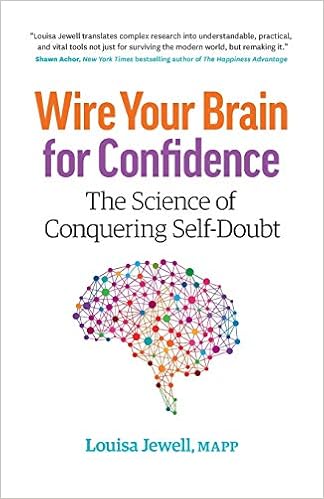
Wire Your Brain for Confidence: The Science of Conquering Self-Doubt

The good news is scientists have discovered the formula on how you can wire your brain for a more action-oriented kind of confidence that boosts your courage to act, even when you’re feeling afraid.  In this approachable and game-changing guide to building your situation-specific confidence, positive psychology expert Louisa Jewell shows that adopting a resilient mindset will enable you to show up as your best self at home and in the workplace. Jewell has deep knowledge of the science of the good life, honed through years of study and practice, and here she presents only the most effective and proven techniques for increasing your grit and confidence.

Wire Your Brain for Confidence

Recommended: Can Brain Science Help Us Break Bad Habits?

Creative Confidence: Unleashing the Creative Potential Within Us All

“Too often, companies and individuals assume that creativity and innovation are the domain of the “creative types.”  But two of the leading experts in innovation, design, and creativity on the planet show us that each and every one of us is creative.  In an incredibly entertaining and inspiring narrative that draws on countless stories from their work at IDEO, the Stanford d.school, and with many of the world’s top companies, David and Tom Kelley identify the principles and strategies that will allow us to tap into our creative potential in our work lives, and in our personal lives, and allow us to innovate in terms of how we approach and solve problems.  It is a book that will help each of us be more productive and successful in our lives and in our careers.”

Creative Confidence

How to Have Confidence and Power in Dealing with People

“Taking a brass tacks approach to communication, How to Have Confidence and Power in Dealing With People explains how to interact with others as they really are, not as you would like them to be. The goal is to get what you want from them successfully – be it cooperation, goodwill, love or security. Les Giblin, a recognized expert in the field of human relations, has devised a method for dealing with people that can be used when relating with anyone – parents, teachers, bosses, employees, friends, acquaintances, even strangers. Giblin shows step by step how to get what you want at any time and in ways that leave you feeling good about yourself. Moreover, the people who have given you want you want to wind up feeling good about themselves, too. The result? Nobody gets shortchanged. It’s a win-win situation. Each chapter includes a handy summary, so there’s absolutely no chance of missing the book’s key points.”

How to Have Confidence and Power in Dealing with People

Recommended: 3 Things You Shouldn’t Let People Say to You

The Confidence Effect: Every Woman’s Guide to the Attitude That Attracts Success

In the twenty-first-century workplace, women are encouraged to step up, lean in, take charge, go for it . . . yet how much has actually changed regarding the makeup of leadership when it comes to adding women’s voices? While it’s easy to still blame a corporate culture that favors men, seasoned executive Grace Killelea identifies another culprit: a surprising disparity in confidence–with men typically prone to overestimate their abilities, and women too often selling themselves short. For real change to take place within the workforce when it comes to adding more women’s voices within leadership, we must get beyond knowing that we simply have the ability as women to speak out, take risks, and fill leadership positions; we must become more confident that we can do those things with excellence! The Confidence Effect moves beyond research, statistics, and cheerleading, and focuses on what’s really important: how women can become more confident, one step at a time.

The Confidence Effect

The Confidence Gap: A Guide to Overcoming Fear and Self-Doubt

” Too many of us miss out on opportunities in life because we lack self-confidence. Whether it’s public speaking, taking on a leadership role, or asking someone for a date, there are situations in which we just don’t feel equipped to handle the challenges we face. Russ Harris offers a surprising solution to low self-confidence, shyness, and insecurity: Rather than trying to “get over” our fears, he says, the secret is to form a new and wiser relationship with them.”

The Confidence Gap

Enough: Silencing the Lies That Steal Your Confidence

“What Can You Do When You Feel You’re Just Not Good Enough?

Do the voices in your head say you’re not good enough, smart enough, pretty enough…or just not enough, period? It’s time to stop listening to lies that sabotage your confidence and embrace the truth of who God says you are.

Popular author and speaker Sharon Jaynes exposes the lies that keep you bogged down in shame, insecurity, and feelings of inadequacy. By recognizing the lies and replacing them with truth,”

What other books do you recommend to help someone boost their confidence?

Step Out of Your Comfort Zone and Live Without Regrets

You have never truly lived until you step out of your comfort zone.

One of the biggest challenges, one of the biggest things holding you back, preventing you from ever truly experiencing what is possible for you or from reaching out to more of your true self is Fear.

The Fear of failure, what if I fail and people laugh at me.

6 Best Confidence Courses to Build Real Confidence

Have you ever felt like you weren’t confident enough? Not having real confidence can make you miss out on opportunities available for you.

You have the opportunity to learn how to boost your confidence levels Here’s a list of confidence courses available for you to get started.

Here is a list of 6 high impact confidence courses that can help you to build real confidence and boost your confidence levels.

Double Your Confidence and Self Esteem – Complete Blueprint – Udemy

This course was designed to help you develop your inner confidence, stop seeking approval from others, eliminate the fear of rejection, eliminate nervousness, and social anxiety. One of the key factors in being confident is believing in yourself, this course offers practical strategies, techniques, and methods to help you through it.

Become more social and connect with people, as well as feel more comfortable in your own skin.

It also includes:

  • 5 hours on-demand video
  • 1.5 hours on-demand audio
  • 7 downloadable resources
  • Full lifetime access
  • Accessible on mobile and TV
  • Certificate of Completion

SELF-CONFIDENCE: 40-minute Confidence & Self Esteem Guide – Available in Udemy 

SELF-CONFIDENCE: 40-minute Confidence & Self Esteem Guide is one of the best-selling courses on Udemy. If you are interested in boosting your self-confidence I recommend you to take a look at this course. 

While boosting self-confidence, this course can help you to overcome the fear of rejection in a convenient manner. Another interesting thing is that it explains how you will be able to embrace vulnerability.

On the other hand, it can expose you to some of the most powerful strategies that can support you with developing self-esteem as well as how to compliment your self-confidence with proper body language.

This course includes:

  • 1-hour on-demand video
  • 3 downloadable resources
  • Full lifetime access
  • Access on mobile and TV
  • Certificate of Completion

How to Break the Habit of Self-Doubt & Build Real Confidence – Creative Live 

It is said that doubt kills more dreams than failure ever did. Living with self-doubt can ruin your self-confidence and affect your dreams. Therefore, it is crucial to have a solid understanding of how to overcome self-doubt.

How to Break the Habit of Self-Doubt & Build Real Confidence is a course that can help through it. You will learn how to overcome self-doubt and transform your life for the better.

The best thing about this course is that content is presented to you in the form of videos that can be accessed anytime. 

Confidence Classes Online – Skillshare 

If you are looking for an interactive method to learn how to boost your self-confidence, you can take a look at Confidence Classes Online.

It can provide you with numerous courses that are related to self-confidence. They include courses on self-discovery, assertiveness, life purpose, public speaking, and self-esteem.

This course can contribute massively to building your self-confidence levels. You don’t have to think twice before you start the Confidence Classes Online. That’s because all the content that you can find in the course are compiled by experts. Therefore, you are guaranteed to end up with success. 

Unshakable Confidence: Become 100% Secure in Who You Are – Udemy 

When you are not confident in yourself, you are giving out a negative impression to others. Along with that impression, you will never be able to win leadership opportunities.

You can overcome all that hassle by following Unshakable Confidence: Become 100% Secure in Who You Are. This course can help you to learn how to face challenges in your life with improved confidence levels.

Along with that, you can learn how to live your life without having to wait for the approval of other people. You can also overcome social anxiety through this course.

Confidence Masterclass: How to Become Confident

Confidence Masterclass: How to Become Confident is a straightforward guide designed to help you with improving your self-confidence levels. When you are following this course, you can learn core concepts and theories that are needed to boost confidence levels.

You can learn how to improve self-esteem and how to overcome nervousness in some of the situations. Strategies that are presented to you in order to build your self-confidence levels are powerful and they guarantee to deliver positive results.

Next Steps

Go through these courses and pick the best for you to boost your confidence levels. 
Get the Confidence Factor Journal for free.

Recommendations:

6 Best Confidence Courses to Build Real Confidence

25 Powerful Confidence Quotes to Help You Believe in Yourself

Self-Confidence, What Is It Really About Anyways?

Life-Changing Lessons From Anthony Joshua’s Loss to Victory

0

Anthony Joshua won his first 22 pro fights and was a heavyweight champion of the world between 2016 and 2019 until a shocking loss to Andy Ruiz Jr. His loss came as a big shock to him and as a great lesson. One he learned a great deal from.

Six months after a terrific knockout loss, Anthony Joshua regained control of the heavyweight division and put both his career and status as a global boxing superstar back on track. Joshua was upset for his loss and came back 11 pounds lighter than his loss in June. This time he outboxed Andy Ruiz Jr. in Saturday’s rematch to regain his WBA, WBO, and IBF titles by a wide unanimous decision.

There are several lessons you can learn from Anthony Joshua’s loss to regaining his titles as a true champion. Here are 5 lessons to learn from AJ’s defeat to victory.

Make No Excuses

If you ever want to get things done, make no excuses.

“I make no excuses. My boy [Dereck] Chisora said I could do this if I was willing to d-i-e [but] this is boxing,” Joshua said. “I gave [Ruiz] his credit in the first fight. There are no excuses.”

Anthony Joshua quotes to inspire the winner in you

Learn From Your Failures

Anthony Joshua has been successful in his fights but his loss brought with it a great lesson.

Life-Changing Lessons From Anthony Joshua's Loss to Victory

Acknowledge and accept that you failed when you fail. What’s more important is that you learn from the lessons your failures carry with it. Restrategize, readapt your next moves and get back up.

“I respect Andy and his trainer so much but I wanted to put on a great master class and show that the sweet science of this sport is about hitting and not getting hit.”

Turn Your Loss Into Positive Motivation

Joshua put his defeat earlier behind him, rather than dwell in it and moved on.

Life-Changing Lessons From Anthony Joshua's Loss to Victory
Anthony Joshua, Under Armour – I WILL

He said “I didn’t lose heart or fire in my belly,” Joshua continued. “There is no fear in my heart, my eyes or my mind. I didn’t lose any commitment.

“There was a big change and a big shift in the division so it definitely feels different.

“I turn this stuff into a positive otherwise it will eat you up, and will fold into a way that I don’t want it to go. I had to own the situation and make it work for me.”

Stay Hungry, Stay Humble

Anthony Joshua humbled by his loss in June to Andy Ruiz Jr. never lost his hunger to get back up. His insatiable hunger for success got him back up after hitting the ground.

Life-Changing Lessons From Anthony Joshua's Loss to Victory
Anthony Joshua re-gains his heavyweight titles!

“As I always say, I’m not perfect but I’m trying. Never a change in mentality. You know the saying — stay hungry, stay humble. I’m hungry, I’m humble in defeat and I’m going to remain humble in victory.”

Be Prepared

“It’s all about preparation,” Joshua said. “One day when I release a book on my career, I’ll talk about my experiences. Anyone can do it, life is a roller coaster. I took my loss and came back. “If you heard, we are going to do it a third [fight].”

Being prepared has indeed shown that it is detrimental for anyone to succeed in anything.

“By failing to prepare, you are preparing to fail.”― Benjamin Franklin

Did you watch the rematch? Are there any lessons you learned and could share about his AJ’s victory?

How to Be Successful – Create Your Own Path to Success

A maths teacher gives a lesson about the path to success. Whatever you want to achieve in life depends on the path you take. #motivation Best Motivational Video | Inspiration | Life Lessons ►

SUBSCRIBE for more: https://bit.ly/2uzK6Sb ✔️

CONTACT: info@thesuccesselite.com ✔️

FACEBOOK ► https://bit.ly/2Lfom8y ✔️

TWITTER ► https://bit.ly/2KXVHpi ✔️

INSTAGRAM ►https://bit.ly/2zNYL1U ✔️

Speaker: Anthony C. Ejiogu: https://www.thesuccesselite.com/about –

Please watch: What Fear of Heights Taught Me and How I Overcame

Can Brain Science Help Us Break Bad Habits?

Can Brain Science Help Us Break Bad Habits?
Because the brain forms habits unconsciously, resolutions rarely work.Illustration by Jan Buchczik

Several years ago, I bought a smartphone and soon came to love it. Being able to send an e-mail, look up a fact, or buy something no matter where I was meant a previously unimaginable gain in productivity. Every time I got an e-mail, the phone emitted a ping and I would deal with whatever it was, priding myself on my efficiency. Texts arrived with the tones of a French horn and were similarly dispatched. Soon, I was reaching for the device every time it made a sound, like Pavlov’s dog salivating when it heard a bell. This started to interfere with work and conversations. The machine had seemed like a miraculous servant, but gradually I became its slave.

I’d always prided myself on my will power. Like most people who’ve made it through medical training—with its early mornings and its long shifts when your friends are partying—I had an established track record of delaying gratification. It didn’t matter. When I tried switching the phone to silent, I ended up checking it perhaps even more often, just in case there was something to deal with. The only time I managed to resist was during Shabbos, when I don’t read e-mail. But I’d be watching the clock, counting the hours till I could turn the thing on. For the first time, I could imagine what it’s like to be a smoker craving a cigarette. Checking the smartphone had become a bad habit that I couldn’t break.

Habits, good and bad, have long fascinated philosophers and policymakers. Aristotle, in the Nicomachean Ethics, surveyed existing notions of virtue and offered this summary: “Some thinkers hold that it is by nature that people become good, others that it is by habit, and others that it is by instruction.” He concluded that habits were responsible. Cicero called habit “second nature,” a phrase that we still use. And when Alexander Hamilton, in Federalist Paper No. 27, considered how to create citizens who would obey the federal laws of the newly formed republic, he used another proverbial phrase: “Man is very much a creature of habit.” If federal law permeated matters at the state level, it would seem part of everyday life. “The more it circulates through those channels and currents in which the passions of mankind naturally flow, the less will it require the aid of the violent and perilous expedients of compulsion,” he wrote.

In the modern era, habits have become a significant area of scientific inquiry. Psychologists have explored the genesis of habitual behavior and its impact on health and happiness. William James, echoing Aristotle, wrote, “All our life, so far as it has definite form, is but a mass of habits,—practical, emotional, and intellectual . . . bearing us irresistibly toward our destiny.”

Few of us like to think of ourselves in such passive terms. What about will power? Marketers flatter our sense of agency with slogans like “Just Do It” (Nike) and “Declare Your Path” (New Balance). Much popular psychology, too, bolsters our belief in self-control. In the famous Stanford marshmallow experiment, devised by Walter Mischel, in the nineteen-sixties, children were seated alone in front of a marshmallow and were scored on whether they resisted gobbling it down. The resulting determination of a child’s level of “executive function” supposedly distinguishes life’s winners and losers, predicting such things as performance on the SAT, duration of relationships, and career success. But how can that be, if we’re just creatures of habit?

In “Good Habits, Bad Habits” (Farrar, Straus & Giroux), the social psychologist Wendy Wood refutes both James’s determinism and glib exhortations to be proactive and seeks to give the general reader more realistic ideas for how to break habits. Drawing on her work in the field, she sees the task of sustaining positive behaviors and quelling negative ones as involving an interplay of decisions and unconscious factors. Our minds, Wood explains, have “multiple separate but interconnected mechanisms that guide behavior.” But we are aware only of our decision-making ability—a phenomenon known as the “introspection illusion”—and that may be why we overestimate its power. The executive functions that make will power possible give us, she writes, “the sense of agency that we recognize as ‘me.’ ” But that comes at a cost in terms of effort. To go about our lives, we need to make some behaviors automatic.

Functional MRI scans have given researchers a peek into the respective neural networks that are active during rote and conscious tasks. A brain scan of someone learning a task shows activity in the prefrontal cortex and the hippocampus, networks associated with decision-making and executive control. With repetition of a task, brain activity moves into areas of the putamen and the basal ganglia, deep in what Wood calls “the rudimentary machinery of our minds.” There, a task is turned into a habit.

These more primitive areas of the brain demand less of our mental energy. Whole sequences of actions become linked, a process known as “chunking.” When we get into a car and drive off, we don’t need to think about the separate actions of buckling a seat belt, turning on the ignition, putting the car in drive, checking the mirrors and the blind spot, and pressing the gas pedal. All these steps, chunked into a single unit in the memory, are triggered by the environmental cue of getting into your car. This frees us up to concentrate on what most requires conscious attention. We can think about where we’re going or the day’s tasks, and keep an eye out for anything unusual on the road.

Wood’s research originally focussed not on habits but on persistence. For “one-off, occasional behaviors,” like getting a flu shot, conscious decisions were all that was required. For behaviors involving repetition, though, habits were crucial. William James estimated that “ninety-nine hundredths or, possibly, nine hundred and ninety-nine thousandths of our activity is purely automatic and habitual.” This was a guess; Wood, however, devised a study to quantify just how often people act out of habit. Using a research technique known as experience sampling, she had participants spend two days recording what they did while they were doing it. Results varied across the groups studied, but the basic finding was that our actions are habitual forty-three percent of the time.

This explains why conscious knowledge is not in itself enough to change behavior, and why public-health initiatives that educate people about healthy choices tend to fail. In 1991, the National Cancer Institute determined that only eight percent of Americans were aware of the recommendation to eat at least five servings of fruit and vegetables daily. A national campaign was declared: 5 a Day for Better Health. Six years later, thirty-nine percent of Americans knew about five servings a day, a nearly fivefold increase, but actual diets had barely changed. In 2007, government officials tried again, launching a program called Fruits & Veggies—More Matters. Even so, by 2018 only twelve percent of Americans ate the recommended two servings of fruit daily, and only nine percent ate three servings of vegetables. Simply informing us of what’s good for us doesn’t work, because so much of our eating, cooking, and shopping are governed by habit.

In Mischel’s marshmallow experiment, only a quarter of the subjects were able to resist eating the marshmallow for fifteen minutes. This implies that a large majority of us lack the self-control required to succeed in life. But a less-discussed part of the study suggests a way of circumventing our frailty. The researchers compared the results of two situations: in one, children could see the marshmallow in front of them; in the other, they knew that it was there but couldn’t see it. On average, the children lasted only six minutes when presented with visible temptation but could manage ten minutes if the treat was hidden. For Wood, this outcome shows that self-control is “not so much an inherent disposition but instead a reflection of the situation we are in.” A few tweaks to our environment may enable us to emulate people who seem more disciplined.

A study of self-control among college students bears out this hypothesis. The students were told to report every time they thought, “Oops, I shouldn’t do this”—for instance, when they stayed up too late, overslept, overate, or procrastinated. They were most successful at adopting productive behaviors not when they resolved to do better or distracted themselves from temptation, but when they altered their environment. Instead of studying on a couch in a dorm, with a TV close by, they went to the library. They ate better when they removed junk food from the dorm refrigerator. “Successful self-control,” Wood writes, “came from essentially covering up the marshmallow.”

Even people who score high on self-control questionnaires may owe their apparent virtue to situational factors rather than to sheer fortitude. A study of such people in Germany found that they reported resisting temptation surprisingly rarely. “They were living their lives in a way that hid the marshmallow almost all the time,” Wood writes. This observation leads to the crux of her book’s thesis: the path to breaking bad habits lies not in resolve but in restructuring our environment in ways that sustain good behaviors. Wood cites the psychologist Kurt Lewin, who argued that behavior was influenced by “a constellation of forces” analogous to gravity or to the fluid dynamics that make a river run faster or slower. Those forces work depending on where you are, who’s around you, the time of day, and your recent actions. We achieve situational control, paradoxically, not through will power but by finding ways to take will power out of the equation.

The central force for eliminating bad habits, according to Wood, is “friction”: if we can make bad habits more inconvenient, then inertia can carry us in the direction of virtue, without ever requiring us to be strong. She cites the ways in which increased friction has produced a decline in smoking: laws that ban it in restaurants, bars, airplanes, and trains; taxes that have helped triple the price of cigarettes in the U.S. in the past twenty years; the purge of cigarettes from vending machines, and of tobacco ads from TV and the radio.

Meanwhile, however, businesses all around us try to reduce friction. A cashier taking an order at McDonald’s is scripted to ask, “Would you like fries with that?” This simple question encourages us to eat more fat and carbs. Binge-watching on Netflix or Hulu is facilitated by the way that the next episode starts automatically as the credits roll on the previous one. Wood talks to M. Keith Chen, a former head of economic research for Uber, who explains that the app was designed to minimize friction. “The phone’s GPS knows where you are,” he says. “You don’t even need to think about it. . . . You get out without handling cash.”

The tendency of companies to act as our enablers was extensively examined in Charles Duhigg’s best-seller “The Power of Habit” (2012). Like Wood, Duhigg, who when he wrote the book was a reporter at the Times, notes ways that the fast-food industry designs prompts to make us consume more. McDonald’s standardizes the appearance of its restaurants, in order to trigger habitual eating routines. The foods at many chains are specifically engineered to deliver bursts of salt and fat that immediately light up the reward centers of the brain.

Examining corporate efforts to capitalize on habit formation, Duhigg describes the work of an early-twentieth-century advertising guru, Claude C. Hopkins, whose campaign for Pepsodent toothpaste is said to have established toothbrushing as habitual among Americans. When Pepsodent first appeared, in 1915, few people bothered to brush their teeth, and a leading dental researcher of the time pronounced all toothpastes useless. Hopkins focussed his marketing message on the film of plaque that covers our teeth; in 1917, his newspaper ads proclaimed it “the basic cause of all tooth troubles.” In fact, plaque can be temporarily removed simply by eating an apple, and toothpastes of the time didn’t remove any more of it than brushing without toothpaste did. Nevertheless, Hopkins set about amping up the dangers of plaque and telling the public that Pepsodent was the only way to get rid of it. “Just run your tongue across your teeth,” another ad read. “You’ll feel a film—that’s what makes your teeth look ‘off color’ and invites decay.” In just a few years, Pepsodent had become one of the best-known products in the world.

Duhigg, like Wood, sees habitual routines as being driven by cues and rewards. Pepsodent wasn’t the only brand that claimed to remove the film on teeth, but ingredients that it used to insure a fresh taste, such as citric acid and mint oil, also happened to be mild irritants, which produced a satisfying tingle in the mouth. If Hopkins, by making consumers aware of the film on their teeth, had created a cue, the toothpaste itself provided a physical reward. Such loops of cue and reward are powerful: if we haven’t brushed our teeth, something feels wrong. Two decades after Hopkins launched his campaign, using toothpaste had become the norm for a sizable majority of the U.S. population. Hopkins, as Duhigg puts it, had “created a craving.”

Recommended: Books to Help Build Your Confidence

Where Wood emphasizes situational control as a way of making good habits easy, Duhigg writes about a woman who bites her nails and is advised to find something else to do with her hands that will produce a comparable physical stimulation, such as rapping her knuckles on a desk. The idea is to keep the powerful structure of cue and reward intact but to tweak the content of the routine. For both writers, though, the key lies not in breaking a habit through will power but in replacing one habit with another.

Both, too, emphasize the role of conscious effort—not in resisting habit but in analyzing it, the better to formulate a strategy for reform. Duhigg describes how, after having gained some weight, he gave up getting a cookie each afternoon in the Times cafeteria. Putting a no-cookie injunction on a Post-it note was a non-starter: he’d ignore it, wander to the cafeteria, chat with colleagues at the cash register, and buy and eat his cookie. So he set about identifying the trigger for his habit, adopting five categories proposed by researchers: time, place, emotional state, other people, and the action immediately preceding the habitual one. Was he hungry, or bored, or in need of a break or a blood-sugar boost? He switched up his routine, eating a doughnut at his desk instead of visiting the cafeteria, or taking a brief stroll outside. He was testing hypotheses: if eating the doughnut at his desk didn’t sate the urge to go to the cafeteria, he could rule out sugar. By a process of elimination, he determined that his habit was really driven by a need for interaction and distraction. The best replacement for a cookie turned out to be going over to a friend’s desk to chat.

Wood ends her book with advice for those of us who have become hostages to our smartphones. She offers a stepwise strategy. First, recognize your dependency, and acknowledge how the habit disrupts work, social interactions, and safe driving. Next, “control the context cues,” meaning identify what triggers you to grab the phone. For me, the cues are aural (the ping, the French horn) and visual (pop-ups on the screen). I already knew that putting the phone on silent wasn’t enough to break the habit, but, as in the marshmallow experiment, out of sight could be out of mind. In the mornings, preparing breakfast, I found that it helped to leave the phone in another room. In the car, it went in the glove compartment. When walking around, I’d put it in a zippered pocket. There were other ways of generating friction and making the habit harder to indulge. Turning the phone off completely was much more effective than silencing it, not because I wasn’t curious about who might have e-mailed me but because turning it back on was a hassle.

Wood advises us to come up with new rewards as substitutes for the ones the phone provided. I listened to music on the car radio. In the evening, instead of scrolling through tweets and e-mails, I sought out authors I’d never read. At the end of each day, I felt calmer, and free.”

♦This article appears in the print edition of the October 28, 2019, issue, with the headline “The Resistance.”

Written by Jerome Groopman, a staff writer at The New Yorker since 1998, writes primarily about medicine and biology. His latest book is “Your Medical Mind: How to Decide What Is Right for You,” with Dr. Pamela Hartzband.

How I Started A LifeStyle Business

Thank you Julia Lefaivre for joining me on the THESUCCESSELITE in today’s interview about how you started a lifestyle business.

Tell us a bit more about yourself and what you do

I am a health coach, author and business mentor residing in Alberta, Canada. I help women work smarter, not harder, whether it’s with their health goals or their business. I help them focus on what matters most and get rid of the fads and fluff.

How I Started A LifeStyle Business

What’s the story behind how you started your lifeStyle business?

I first started my career as an elementary school teacher back in 2005. I was a teacher for ten years. (2015) I had always had a passion for fitness and originally wanted to be a physical education teacher, but when that didn’t work out, I became a classroom teacher. In 2012 after having my second child, I found myself questioning my career and if it still fits my dream.

It no longer matched my life plan and idea of my dream life. An opportunity came up in 2014 to start my online health and fitness coaching business, so I did! A year and a half later, I was able to leave my full-time career to run my business full time. I still coach women in health in fitness with my one-on-one coaching and through my 3.11 Fit group program. I also mentor women in business to grow their business to create their version of having it all. 

When did you know this was what you wanted to do?

The moment my first client saw success! I knew this is what I was meant to do. There is something so fulfilling and rewarding about seeing someone succeed. I feel honored to get to be apart of their journey.

What challenges did you encounter along the way, and how did you overcome them?

Ha! There have been many ups and downs. Too often, people think it’s easy or that those that see even a little success, have it easy or don’t struggle. But that is not the reality. Running a business is hard; it takes sacrifice. I can guarantee it is worth it. I struggled with launching programs that flopped utterly. I have battled my self-doubt. Focusing on the failures as feedback and opportunities to learn helped direct me to the next step.

What books, podcasts, tools, resources you would recommend that helped you?

I’m not sure we have enough time or space to list them all. Hahaha!!!

I love podcasts and audiobooks. If you are someone like me, where having the time to sit down and read is limited, this is a great way to get in personal development. I listen while I work out, drive, and even do chores around the house. Personal development is just that ‘personal’ meaning you should choose something that is an area you need to work on or grow.

Here are a few of my recommendations:

Podcast:

What skills/qualities helped you to create a business in lifestyle?

I consider myself a lifelong learner, so if there is something that I don’t know how to do or I am struggling within my business, I go out and learn how to do it. There are webinars, seminars, conferences, and lots of online courses that are helpful.

You wrote a book Fitness to Freedom, what’s the story behind it?

Fitness to Freedom
Fitness to Freedom – Bonus 20% off

Yes, this book is a collaboration between myself and 20 other women. We all share our personal stories about our journey with fitness. Our struggle and how we have grown through it. How fitness has helped shaped who we are today. My side of the story was about my struggle with nutrition.

Having been an athlete all my life, I never really had to worry about what I ate.

I knew healthy versus unhealthy, but it didn’t matter what I ate. Regardless, I share a story about going back, what I learned growing up and eating fresh veggies from my parents’ garden, and now paying those lessons forward to my kids and clients. 

Why was it necessary to share your story with the world?

I believe we all have mountains to overcome, and part of our purpose is to share how we overcame them. There are others currently climbing their mountain who needs to hear how others who have been in similar situation overcame. I share my story with hopes that it will impact some one’s life positively and help someone who may need guidance.

What advice would you give to those who want to find their purpose, start a business, be healthy or pursue their dreams?

It’s SIMPLE! Just START! There will always be obstacles, other priorities, life that gets in the way. So, if you are thinking about it, just get started. Imagine one year from now. Where would you rather be? Running your dream business, living with a purpose, or exactly where you are today, wishing you had started a year ago. As you get started, you will learn what will work for you.

Before we go, are you currently work on any projects?

I am currently working on my new online group fitness program. It’s eight weeks, which includes strength training and balanced macros nutrition. The next round will kick off on January 6th. As for my business clients, I am working with my one-on-one clients, helping them to reach their business goals. I am also helping others in business with my ‘Know your Niche‘ program to help them stop spinning their wheels and start attracting the right client more. 

Where can we learn more and connect with you?

Feel free to connect with me on:

Instagram: instagram.com/julialefaivre

Facebook: fb.me/JuliaLefaivreCoach

My website is julialefaivre.mykajabi.com

Send an email to julialefaivre@gmail.com

As a bonus (USE CODE: JULIA20 to save 20%) on your Order Fitness to Freedom Book

101 Motivational Quotes to Inspire Employees at Work

1

Motivational quotes for work are great at inspiring employees and employers. Some quotes carry thought-provoking actionable tips to stay pumped and ready to get things done.

As a leader of a big or small team, part of what you stand for is to inspire your team members to grow and perform at their best. In an ideal world, you will always have awesome team members that are self-motivated, driven to continually add value and seek opportunities to gro. In reality, your team members may have lost a little fire in them, or are one of those periods where they aren’t so motivated.

How can you inspire or motivate them into action? There are several ways to inspire and motivate your team members and one of them is through motivational quotes.

Imagine you noticed some team members aren’t that motivated, how can you inspire or motivate them into taking action? As a leader, finding the right words during a meeting pr a speech that would reach deep and pick them up can be daunting. This is where inspirational quotes for work or inspirational videos come in handy to get the mental boost into being a high-performance goal-oriented individual.

Here are 101 high-performance driven motivational quotes for employees gathered from books, movies, songs, and even TED Talks that your coworkers you’ll be delighted to hear and be proud to put as a sticker in the office. Choose out of these workplace quotes that align with your values and motivate your coworkers.

1. Whether you think you can, or you think you can’t – you’re right. —Henry Ford

2. Becoming is better than being. —Carol Dweck, Mindset

3. I know not all that may be coming, but be it what it will, I’ll go to it laughing. —Herman Melville, Moby Dick

4. The sun himself is weak when he first rises, and gathers strength and courage as the day gets on. —Charles Dickens, The Old Curiosity Shop

5. How wonderful it is that nobody need wait a single moment before starting to improve the world. —Anne Frank, The Diary of a Young Girl  

6. Oh yes, the past can hurt. But you can either run from it, or learn from it. —Rafiki, The Lion King

7. If I had nine hours to chop down a tree, I’d spend the first six sharpening my axe.—Abraham Lincoln

8. The mind is its own place, and in itself can make a heaven of hell, a hell of heaven. —   John Milton, Paradise Lost

9. Intelligence is the ability to adapt to change. —Stephen Hawking

10. Leaders can let you fail and yet not let you be a failure. —Stanley McChrystal

11. Would I rather be feared or loved? Easy. Both. I want people to be afraid of how much they love me. —Michael Scott, The Office

12. The question isn’t who’s going to let me; it’s who is going to stop me? —Ayn Rand

13. Kid, there are heroes and there are legends. Heroes get remembered, but legends never die. Follow your heart, kid, and you’ll never go wrong. —Babe Ruth, The Sandlot

14. Talent wins games, but teamwork and intelligence wins championships. —Michael Jordan

15. There will be little rubs and disappointments everywhere, and we are all apt to expect too much; but then, if one scheme of happiness fails, human nature turns to another; if the first calculation is wrong, we make a second better: we find comfort somewhere. —Jane Austen, Mansfield Park

16. To understand the heart and mind of a person, look not at what he has already achieved, but at what he aspires to. — Kahlil Gibran

17. Do or do not. There is no try. —Yoda, The Empire Strikes Back

18. Be men, or be more than men. Be steady to your purposes and firm as a rock. This ice is not made of such stuff as your hearts may be; it is mutable and cannot withstand you if you say that it shall not. —Mary Shelley, Frankenstein

19. Always be a first-rate version of yourself, instead of a second-rate version of somebody else. —Judy Garland

20. The only way to achieve the impossible is to believe it is possible. —Charles Kingsleigh, Alice in Wonderland (2010)

21. Man is only truly great when he acts from the passions; never irresistible but when he appeals to the imagination. —Benjamin Disraeli, Coningsby

22. When we strive to become better than we are, everything around us becomes better too. —Paulo Coelho, The Alchemist

23. Hey there, Mr. Grumpy Gills. When life gets you down do you wanna know what you’ve gotta do?  Just keep swimming. Just keep swimming. Just keep swimming, swimming, swimming. What do we do? We swim, swim. —Dory, Finding Nemo

24. We must believe that we are gifted for something and that this thing must be attained. —Marie Curie

25. Intelligence without ambition is a bird without wings. —Salvador Dali

26. If something is wrong, fix it now. But train yourself not to worry, worry fixes nothing. — Ernest Hemingway

27. Life’s like a movie, write your own ending. Keep believing, keep pretending. —Jim Hensen

28. Don’t judge each day by the harvest you reap but by the seeds that you plant.—Robert Louis Stevenson

29. You have brains in your head. You have feet in your shoes. You can steer yourself any direction you choose. You’re on your own. And you know what you know. And YOU are the one who’ll decide where to go… —Dr. Suess, Oh the Places You’ll Go

30. Sometimes the fall kills you. And sometimes, when you fall, you fly. —Neil Gaiman, The Sandman

31. For artists, scientists, inventors, schoolchildren, and the rest of us, intrinsic motivation—the drive to do something because it is interesting, challenging, and absorbing—is essential for high levels of creativity. —Daniel H. Pink, Drive

32. In matters of style, swim with the current; in matters of principle, stand like a rock. — Thomas Jefferson

33. Do what you do so well that they will want to see it again and again and bring their friend. — Walt Disney

34. So many things are possible just as long as you don’t know they’re impossible.—Norton Juster, The Phantom Tollbooth

35. Everything should be made as simple as possible but not simpler. —Albert Einstein

36. Innovation distinguishes from a leader and a follower. —Steve Jobs

37. The moment you doubt whether you can fly, you cease forever to be able to do it. —J.M. Barrie, Peter Pan

38. Everything you’ve ever wanted is on the other side of fear. —George Addai

39. I can’t go back to yesterday because I was a different person then. —Lewis Carroll, Alice in Wonderland

40. The world you desire can be won. It exists.. it is real.. it is possible.. it’s yours.—Ayn Rand, Atlas Shrugged

41. There is only one way to avoid criticism. Do nothing. Be nothing. Say nothing.—Aristotle

42. It is not the spoon that bends, it is only yourself. —Spoon Boy, The Matrix

43. Quality is job one. —Henry Ford

44. Write it. Shoot it. Publish it. Crochet it, sauté it, whatever. MAKE. —Joss Whedon

45. The best way out is always through. —Robert Frost

46. How many times do I have to teach you: just because something works doesn’t mean it can’t be improved. — Shuri, Black Panther

47. If your actions inspire others to dream more, learn more, do more and become more, you are a leader. —John Quincy Adams

48. Speak softly and carry a big stick. —Theodore Roosevelt

49. Don’t go around saying the world owes you a living. The world owes you nothing. It was here first. ―Mark Twain

50. It’s life. You don’t figure it out. You just climb up on the beast and ride.―Rebecca Wells, Divine Secrets of the Ya-Ya Sisterhood

51. There’s zero correlation between being the best talker and having the best ideas. —Susan Cain, Quiet: The Power of Introverts in a World That Can’t Stop Talking

52. Unless someone like you care a whole awful lot, nothing is going to get better, it’s not. —Dr. Suess, the Lorax

53. A proud heart can survive general failure because such a failure does not prick its pride. It is more difficult and more bitter when a man fails alone. —Chinua Achebe, Things Fall Apart

54. You will never plough a field if you only turn it over in your mind. —Irish Proverb

55. Ignorance and fear are but matters of the mind—and the mind is adaptable. —Daniel Kish

56. Those who don’t believe in magic will never find it. —Roald Dahl

57. Someone, at some point, came up with this very bad idea that an ordinary individual couldn’t make a difference in the world. I think that’s just a horrible thing. —John Skoll

58. Imitation is suicide. —Ralph Waldo Emerson

59. If you hire people just because they can do a job, they’ll work for your money. But if you hire people who believe what you believe, they’ll work for you with blood and sweat and tears. —Simon Sinek

60. Real courage is when you know you’re licked before you begin, but you begin anyway and see it through no matter what. —Harper Lee

61. Do you want to know who you are? Don’t ask. Act! Action will delineate and define you. — Thomas Jefferson

62. Very often, a change of self is needed more than a change of scene. —A.C. Benson

63. The Answer to the Great Question… Of Life, the Universe and Everything… Is… Forty-two. —Douglas Adams, The Hitchhiker’s Guide

64. Opportunity is missed by most people because it is dressed in overalls and looks like work. —Thomas Edison

65. I’ve learned about the poetry and the wisdom and the grace that can be found in the words of people all around us when we simply take the time to listen. —Dave Isay

66. It is by going down into the abyss that we recover the treasures of life. Where you stumble, there lies your treasure. —Joseph Campbell

67. Follow your passion, stay true to yourself, never follow someone else’s path unless you’re in the woods and you’re lost and you see a path then by all means you should follow that. —Ellen Degeneres

68. It’s easy to solve a problem that everyone sees, but it’s hard to solve a problem that almost no one sees. —Tony Fadell

69. Learning never exhausts the mind. —Leonardo Da Vinci

70. If you’re alive, you’re a creative person. —Elizabeth Gilbert

71. My mother said to me, “If you are a soldier, you will become a general. If you are a monk, you will become the Pope.” Instead, I was a painter, and became Picasso. —Pablo Picasso

72. The power of imagination makes us infinite. —John Muir

73. Luck is a matter of preparation meeting opportunity. —Seneca

74. A man who dares to waste one hour of time has not discovered the value of life. — Charles Darwin

75. Motivation is the art of getting people to do what you want them to do because they want to do it. —Dwight D. Eisenhower

76. There are no two words in the English language more harmful than “good job.”—Terence Fletcher, Whiplash

77. Don’t persuade, defend or interrupt. Be curious, be conversational, be real. And listen. — Elizabeth Lesser

78. The secret of health for both mind and body is not to mourn for the past, not to worry about the future, or not to anticipate troubles, but to live in the present moment wisely and earnestly. —Buddha

79. Failure is the condiment that gives success its flavor. —Truman Capote

80. An innovator is one who does not know it cannot be done. —R.A. Mashelkar

81. If you have built castles in the air, your work need not be lost; that is where they should be. Now put foundations under them. —Henry David Thoreau

82. As long as they are well-intentioned, mistakes are not a matter for shame, but for learning. —Margaret Heffernan

83. I am not a product of my circumstances. I am a product of my decisions. —Stephen Covey

84. You can’t wait for inspiration. You have to go after it with a club. —Jack London

85. “I’m bored” is a useless thing to say. I mean, you live in a great, big, vast world that you’ve seen none percent of. Even the inside of your own mind is endless; it goes on forever, inwardly, do you understand? The fact that you’re alive is amazing, so you don’t get to say “I’m bored.” —Louis C.K

86. If we can challenge convention, we can solve any problem. —Josh Valman

87. Big jobs usually go to the men who prove their ability to outgrow small ones. —Ralph Waldo Emerson

88. In every job that must be done, there is an element of fun. You find the fun, and – SNAP – the job’s a game! —Mary Poppins

89. If you hit the target every time, it’s too near or too big. —Tom Hirshfield

90. Always remember that you are absolutely unique. Just like everyone else. —Margaret Mead

91. You can’t change how people treat you or what they say about you. All you can do is change how you react to it. —Mahatma Gandhi

92. We can easily forgive a child who is afraid of the dark; the real tragedy of life is when men are afraid of the light. —Plato

93. Learn from the mistakes of others. You can’t live long enough to make them all yourselves. —Chanakya

94. What I love most about rivers is, you can’t step in the same river twice. —Pocahontas, Disney’s Pocahontas

95. Strength shows not only in the ability to persist, but in the ability to start over.—F. Scott Fitzgerald

96. It’s time to try defying gravity. —Elphaba, Wicked

97. I have been bent and broken, but – I hope – into a better shape. ―Charles Dickens, Great Expectations

98. Once you’ve accepted your flaws, no one can use them against you.
― George R.R. Martin, A Game of Thrones

99. If you light a lamp for someone else, it will also brighten your path. —Buddha

100. Tough times never last, but tough people do. —Dr. Robert Schuller

101. I would visualize things coming to me. It would just make me feel better. Visualization works if you work hard. That’s the thing. You can’t just visualize and go eat a sandwich. —Jim Carrey

Final Thoughts

How did you enjoy these list of 101 inspiring work quotes?

Work motivational quotes from notable men and women have the potential to impact your coworkers as they have impacted me. Be creative with these quotes by sending out a daily quote of the day for work can have a tremendous impact on your team. Because it just might be the exact thing they need to hear.

Which of these was your favorite motivational quote? Are there quotes here that resonate with the values you share in your workplace? Let us know in the comments below.

Recommended Quotes;

25 Chris Gardner Quotes to Enrich Your Life

0

One of the few people who could be described as highly tenacious is Chris Gardner, Author of “The Pursuit of Happyness“. A homeless father who became a multi-millionaire investor, stockbroker, motivational speaker, author, and philanthropist. In his book, he shared his story of how he struggled with homelessness while raising his toddler son, Christopher Gardner, Jr.  His book became a New York Times, Washington Post #1 Bestseller which inspired a film that became an iconic representation of everyone who had every opportunity to quit due to their circumstances in life but didn’t. Will Smith played Chris in the movie, received a Golden Globe, Screen Actors Guild and Academy Award nomination for his performance.

Chris Gardner’s tenacity is something to be admired as he shared in his book which is not about his life but an inspiration to all who dream big though surrounded by circumstances daunting them to give up.

25 Chris Gardner Quotes to Enrich Your Life

1. “Then again, what seems like nothing in the eyes of the world, when properly valued and put to use, can be among the greatest riches.” – Chris Gardner

2. “Strong people stand up for themselves. Stronger people stand up for others. The irony is that while sleep sometimes brings nightmares, it’s the reality of my waking hours that can cause me the greater fear.” – Chris Gardner

3. “Others may question your credentials, your papers, your degrees. Others may look for all kinds of ways to diminish your worth. But what is inside you no one can take from you or tarnish.” – Chris Gardner

Related: Outstanding Quotes to Change Your Mindset 

4. “Without that sense of self, no amount of paper, no pedigree, and no credentials can make you legit. No matter what, you have to feel legit inside first.” – Chris Gardner

5. “There was a language specific to all things. The ability to learn another language in one arena, whether it was music, medicine, or finance, could be used to accelerate learning and other arenas, too.” – Chris Gardner

6. “Always, always pursue happiness.” – Chris Gardner

7. “The secret to success: find something you love to do so much, you can’t wait for the sun to rise to do it all over again.” – Chris Gardner

8. “One of the things young people always ask me about is what is the secret to success. The secret is there is no secret. It’s the basics. Blocking and tackling.” – Chris Gardner

9. “Claim ownership of your dreams.” – Chris Gardner

10. “Walk that walk and go forward all the time. Don’t just talk that talk, walk it and go forward. Also, the walk didn’t have to be long strides; baby steps counted too. Go forward.” – Chris Gardner

[clickToTweet tweet=”“Don’t ever let someone tell you, you can’t do something.” – Chris Gardner'” quote=”“Don’t ever let someone tell you, you can’t do something.” – Chris Gardner'” theme=”style4″]

11. “If you have a dream, you’ve got to protect it.” – Chris Gardner

12. “Do something that you love. Whatever you’re going to do is going to be tough enough. Find something that gets you so excited that the sun can’t come up early enough in the morning because you want to go do your thing.” – Chris Gardner

13. “It can be done, but you have to make it happen.” – Chris Gardner

14. “The balance in your life is more important than the balance in your checking account.” – Chris Gardner

15. “The world is your oyster. It’s up to you to find the pearls.” – Chris Gardner

Chris Gardner Success Lessons: from homeless to millionarie

16. “But if you don’t take the necessary steps to make them happen, dreams are just mirages that mess with your head!” – Chris Gardner

17. “I was homeless, but I wasn’t hopeless. I knew a better day was coming.” – Chris Gardner

19. “The money thing will come. I know so many people who have so much more money than I. They are miserable. It is so important to be happy.” – Chris Gardner

20. “Do something that makes you happy and makes you feel good about yourself.” – Chris Gardner

21. “As busy as I am wherever I am, I try to get out and walk the streets, to remember how far I’ve come and appreciated every baby step of the way.” – Chris Gardner

22. “Though my mom had too many of her own dreams denied, deferred and destroyed, she instilled in me that I could have dreams. And not just have dreams but had a responsibility to make them a reality. My mom taught me from a very early age that I could do anything I wanted to do.” – Chris Gardner

23. “Do something that makes you feel your work is significant and meaningful. If you just want to make money, that’s a whole different trip. I can’t help you with that.” – Chris Gardner

24. “Hunker down, strap in, and hold on. Hold on baby!” – Chris Gardner

25. You can only depend on yourself. The cavalry ain’t coming” – Chris Gardner

Which one of these quotes is your favourite Quote?  Share your favourite quote in the comment section below.